
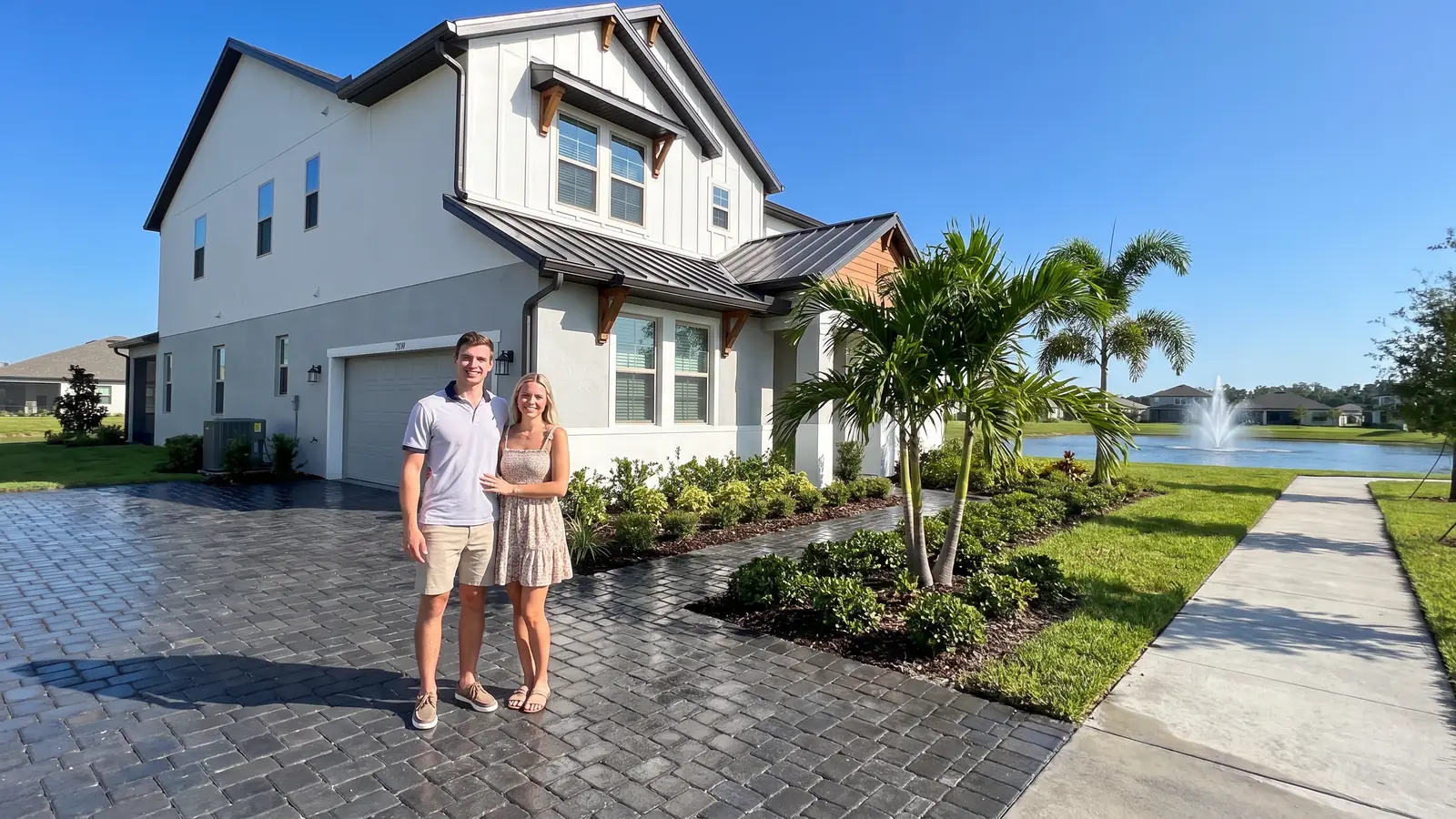
Richer color and joints that stay put
Paver Sealing in Lake Nona, FL
Get a free paver sealing estimate for your Lake Nona driveway, patio or pool deck at (689) 302-4968.
- Brings out deeper paver color
- Fresh joint sand helps lock pavers in place
- Gives weeds less room to grow
- Makes the surface easier to keep clean
- Free estimate, no obligation
Request a Free Estimate
Free, no obligation.
Who handles paver sealing in Lake Nona, and how soon do they reply?
A local contractor handles paver sealing in Lake Nona, FL, and a reply reaches you within 1 business day, usually much sooner. The estimate is free, and booking is up to you. To begin, call (689) 302-4968.
Sealing deepens paver color, holds joint sand where it belongs and makes dirt and algae easier to rinse off. Most of the large Lake Nona neighborhoods were built from 2001 on, so plenty of driveways are weighing a first coat or a second one. A driveway takes tires and oil, while a pool deck takes splash and bare feet, so each area gets its own plan. Tell the contractor how you use each space when you send a free estimate request.
Paver Sealing Lake Nona Is Proud to Serve Central Florida
What is included when pavers are sealed in Lake Nona?
Plan on four parts: a walk-through, an algae and stain treatment, fresh joint sand and the sealer coat. To walk through them for your address, call (689) 302-4968.
Walk-through
The contractor measures the area and notes sunken pavers, old sealer, stains and any place where water stands, then sets a price.
Algae and stain treatment
A sodium hypochlorite based cleaner goes on first. A Tampa Bay paver company says a wash alone leaves algae spores in the pores and joints.
Joint sand
Sand is swept in and watered to settle, so the pavers lock together and weeds have less room.
Sealer coat
A water-based sealer goes onto dry pavers in thin, even passes at the rate on the product label.
How can I tell my Lake Nona pavers need a new coat?
Four signs say a coat is tired: chalky color, low joints, sand scattered on the driveway after a storm and water that sinks in instead of beading. An Orlando sealing company says to expect two to four years from a coat, so a driveway sealed four years ago is worth a look. Topping up sand early costs less than relaying pavers that have shifted. For a quick opinion, call (689) 302-4968.
Which paver sealer holds up in Orlando heat and humidity?
Ask which sealer the contractor plans to use and why, because no one product fits every home. Orlando sealing companies call water-based sealer the standard for brick and concrete pavers, and a Central Florida guide says it lets moisture escape through the paver, which prevents the white haze that solvent products can leave. To compare options for your pavers, call (689) 302-4968.
Natural stone takes a different product. A penetrating sealer soaks in and leaves no film, and an Orlando company warns that a film-forming coat on stone can turn slick and peel. Ask what goes on each area of your property when you send a free estimate request.
Wet look or natural finish: which suits a Lake Nona home?
A wet look gives deeper color and a little shine. A natural matte finish stays closer to the day the pavers were laid. Around a pool, footing matters more than shine, so ask about a slip-resistant additive. To see samples of both, send a free estimate request.
How often should pavers be resealed in Lake Nona?
Unilock gives three to five years between coats, and an Orlando sealing company says two to four, with a sunny driveway near two and a shaded pool deck near four. Count from the day the last coat went on, or from the day the pavers were laid if they were never sealed. Water that soaks in instead of beading is the sign a coat has worn out. To have yours checked, call (689) 302-4968.
Will extra coats of sealer protect pavers longer?
No. More layers do not add years. Unilock links layers stacked over one spot to uneven gloss, and it tells homeowners to saturate the pavers once and pick up the extra with a dry roller. Some water-based systems do call for two or three thin coats, so the right number is whatever the product data sheet says. Ask to see that sheet before you send a free estimate request.
When is the right time to seal pavers in Lake Nona?
Wikipedia's Orlando climate notes describe a hot, rainy season from May to late October and a mild, dry season from November through April. The dry months give the longest rain-free windows. Unilock asks for clear skies for 24 to 48 hours before sealing and up to 48 hours of dry weather afterward. To choose a day that fits the weather, send a free estimate request.
Unilock puts the target between 50 and 90 degrees, with about 75 ideal, and warns that pavers that are too hot can stain or peel early. Orlando's average window for 90 degree days runs from April 9 to October 14, so ask when in the day the coat goes on. Efflorescence on new pavers also has to clear first, and Unilock sees that taking two to three months or as long as a year. Recent install? Mention the date when you call (689) 302-4968.
Can sealing fix pavers that have sunk or spread apart?
No. Sealer cannot lift a low paver or close a wide gap. A paver that rocks under a tire or sits in a puddle needs its base repaired first, and sand stays put only after the surface is level. Ask if leveling is part of the price or billed on its own, then send a free estimate request.
Which areas around a Lake Nona home can be sealed?
Every kind of paved area at a home can take a coat, from the driveway to the pool deck. Wear differs by area, so each one gets its own plan. Start with whichever spot bothers you most, and send a free estimate request.
Driveways
Cars, oil drips and long hours of sun land on the driveway first, so sealing it pays off most where the tires turn.
Pool decks and lanais
A pool deck takes splashing, chlorinated water and wet bare feet every day. Sealing around a pool should leave footing that still grips when wet.
Patios
A patio under tree shade stays damp longer, so algae starts early and stays late. Those spots usually take the most scrubbing.
Walkways and entries
Soil, mulch and drips from planters collect along a walk. Sealing the entry walk is a small job, and it is the first surface a guest steps on.
What wears on pavers in Lake Nona?
Five things show up again and again around Lake Nona: storm washout, sprinkler marks, green growth in the damp, sun fade and the haze on new pavers. Each costs less to handle early. Call (689) 302-4968 and a contractor can tell you which of these your pavers show.
1. Storm washout
Wikipedia's Orlando climate notes say strong thunderstorms hit almost daily in summer and can drop several inches of rain an hour. That much water pulls sand out of the joints, and once the seams run low the pavers shift and weeds root.
2. Orange sprinkler marks
According to UF/IFAS, iron is common in Florida well water, and sprinklers that spray it leave orange streaks behind. Those marks need a rust treatment before any coat, because sealer locks them in.
3. Green growth where it stays damp
Tree shade and sprinkler zones keep pavers wet for more of the day. Algae and mold feed on that moisture and show up as a green or black film.
4. Sun fade
A driveway with open sky above it bakes from sunrise to dusk, and unsealed color fades to chalk there first. A sealer coat slows that and deepens what color is left.
5. White haze on new pavers
New pavers may bloom with efflorescence, a white film that comes from natural salts in the concrete. Unilock puts the clearing time at two to three months, up to a year in some cases, and sealing waits for it.
What does paver sealing cost in Lake Nona?
Plan on about $1.50 to $3.00 per square foot to clean, sand and seal, the range two Central Florida paver companies publish for 2026. Size moves the rate. One lists pool decks at $1.75 to $3.00 and driveways of 600 to 1,200 square feet at $1.50 to $2.50, with a $1,000 project minimum. Stripping a failed coat costs more, and an Orlando company puts strip and reseal at $3.50 to $5.00 per square foot. For a number written for your home, send a free estimate request.
Be careful with a bid far below the range. An Orlando company says a $0.40 per square foot quote almost certainly skips the sanding, uses a cheap sealer or leaves out the cleaning, and a Central Florida guide calls a company that will not name its sealer brand a red flag. Already holding a quote? Call (689) 302-4968 to compare it.
Looking for a wash alone? Read about cleaning with joint sand, check the town list or go back to paver sealing in Lake Nona.
| Paved area | Typical example | Clean, sand and seal |
|---|---|---|
| 300 sq ft | Small patio or walkway | $450 to $900 |
| 600 sq ft | Two car driveway | $900 to $1,800 |
| 1,000 sq ft | Large driveway or pool deck | $1,500 to $3,000 |
| 1,500 sq ft | Driveway plus pool deck | $2,250 to $4,500 |
Math based on the $1.50 to $3.00 per square foot that Central Florida paver companies published as of November 2026. Your contractor sets the actual price after seeing the surface. Repairs, leveling and stripping failed sealer are usually extra.
Why hire a contractor who works around Lake Nona?
A contractor who works around southeast Orlando has dealt with these storms, sprinklers and young pavers before. The price still comes on paper, and the decision stays yours. To begin, call (689) 302-4968.
Contractors who work around Lake Nona
A company that covers Lake Nona already plans around afternoon storms, sprinkler water and pavers on their first coat. That makes the first visit more useful.
Free to ask
The visit and the estimate cost nothing. If the price does not suit you, you can pass and owe nothing.
Prices you can check first
Central Florida companies publish what they charge per square foot, and this site shows those ranges. A quote far above or below them deserves a question.
Your timeline, your decision
Ask for the price on paper and take the time you need. The contractor standards page has a checklist to run through before you sign anything.
Ready for a free paver sealing estimate in Lake Nona?
Phone or use the short form, and a contractor who covers Lake Nona replies within 1 business day, usually much sooner.
Free, no obligation
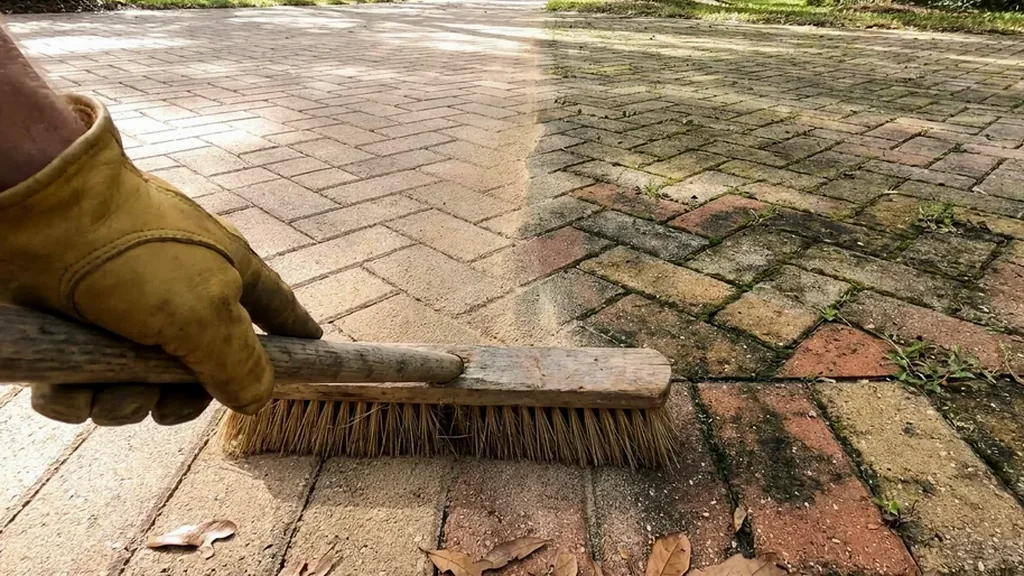
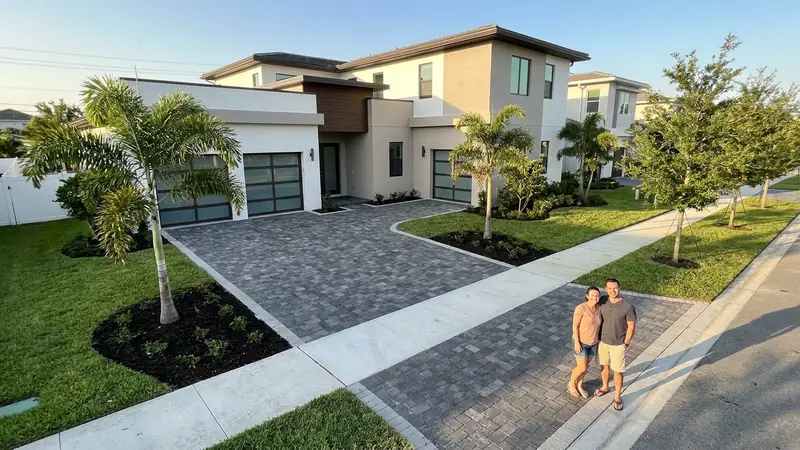
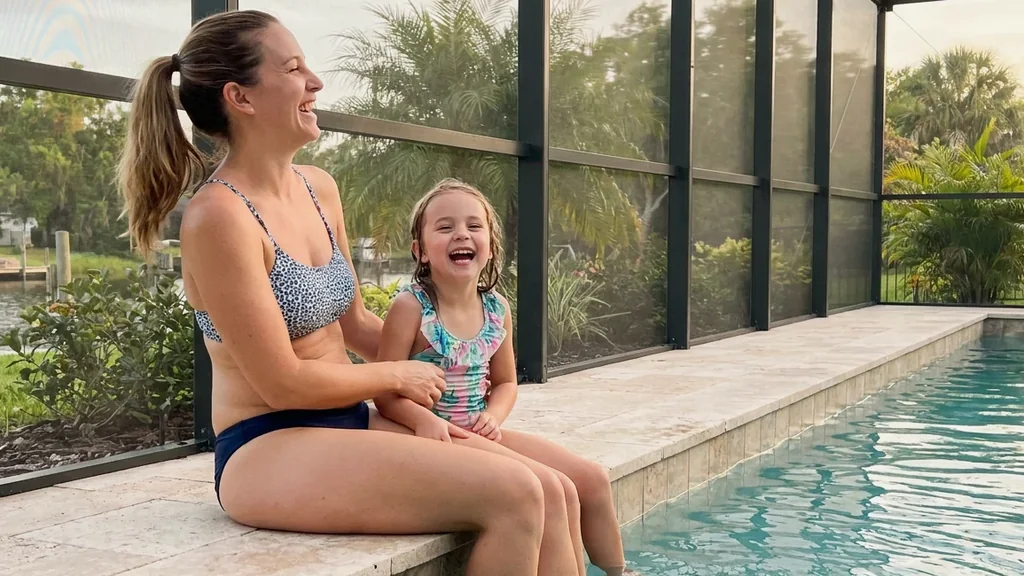
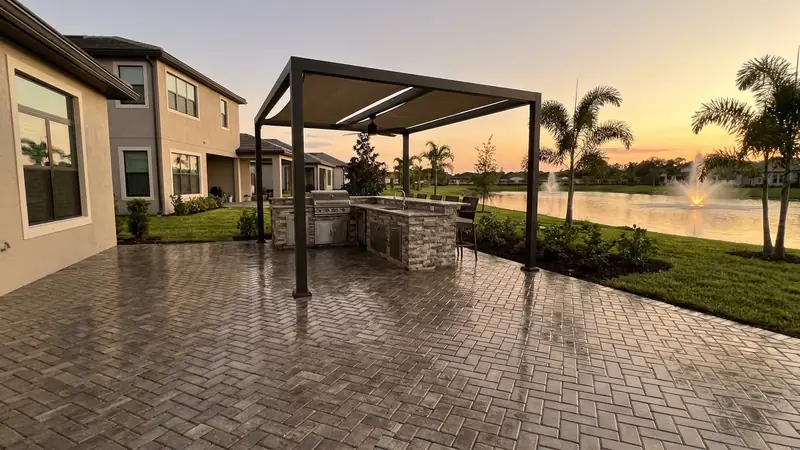
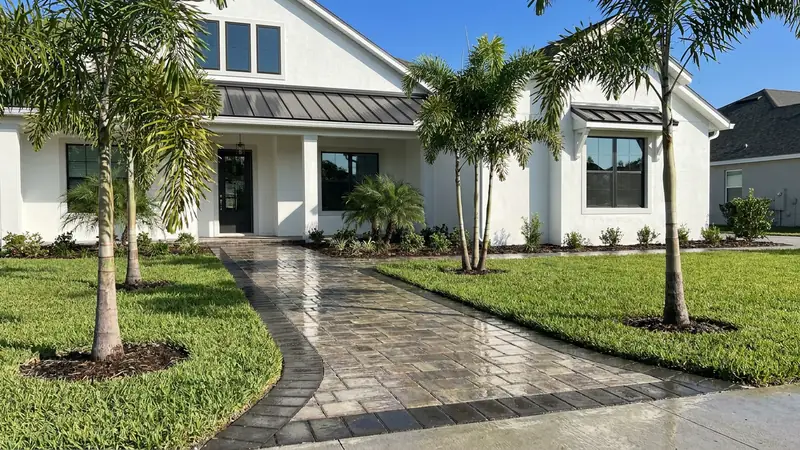
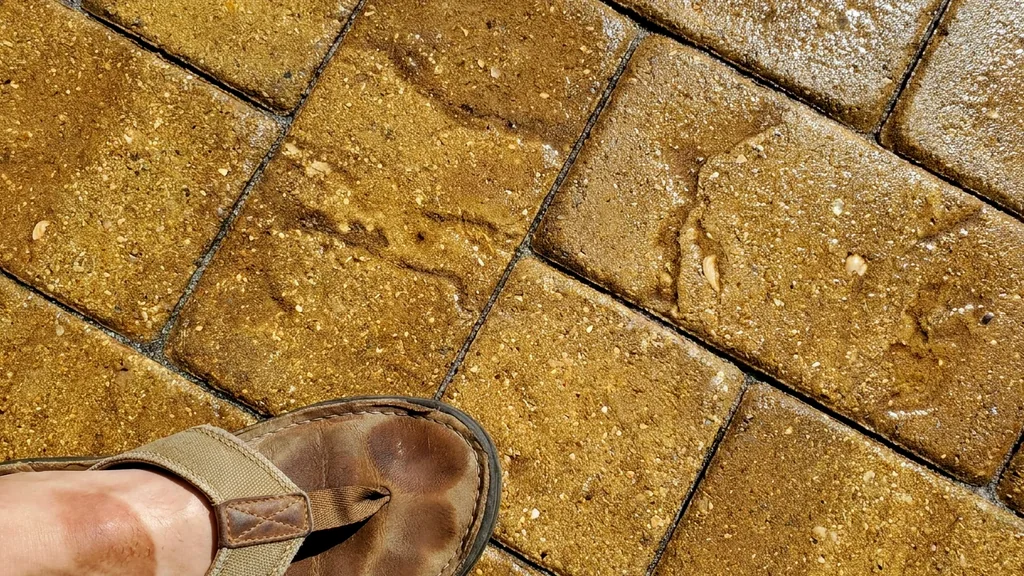
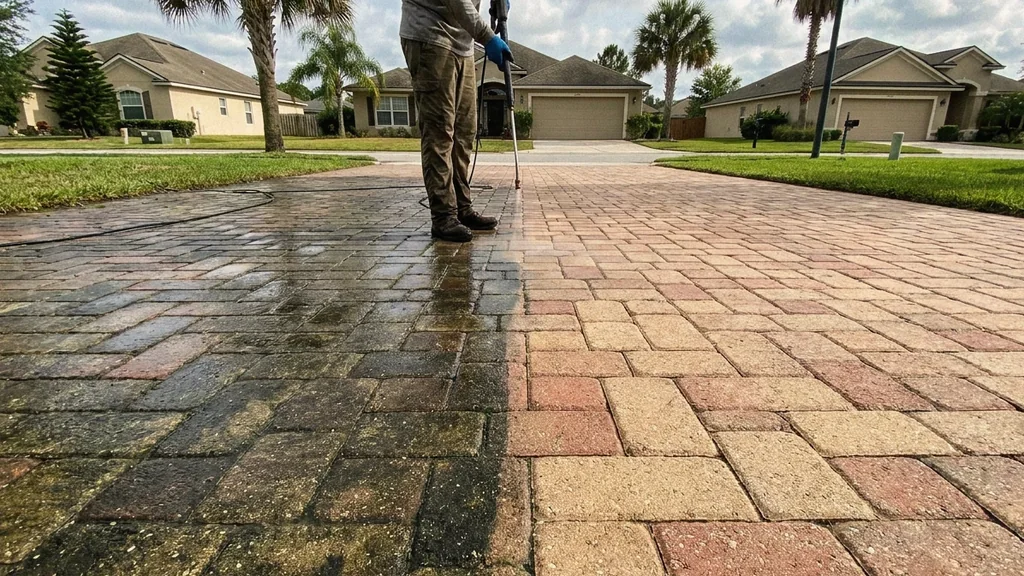
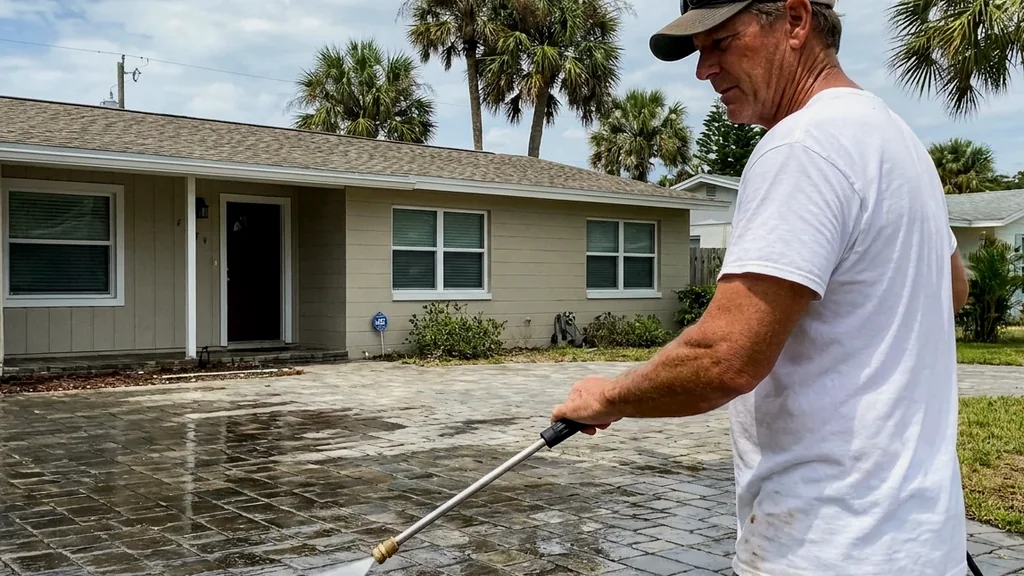
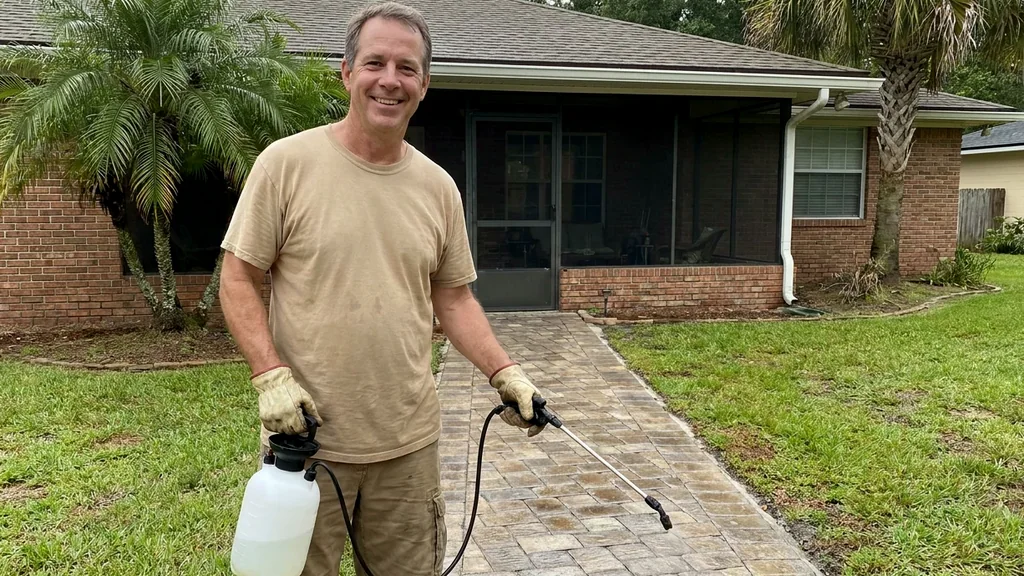
How do pavers look after a fresh coat near Lake Nona?
How does the paver sealing process work from start to finish?
The paver sealing process runs in five steps, from the first look to the final walk-through. If you are ready to schedule, call (689) 302-4968.
1. Measure and look it over
First the contractor walks the area to size the sealing quote, noting dips, loose pavers, old sealer and any spot where water sits.
2. Protect and treat
The contractor covers plants, screens and the garage door and shuts the sprinklers off. A sodium hypochlorite based cleaner goes on and sits so it can kill algae and mold at the root.
3. Wash with a surface cleaner
A rotary surface cleaner rinses the treated area evenly, so the joint sand stays put and the paver faces are not scarred.
4. Refill the joints
Once the pavers are dry, joint sand is swept in, settled with water and topped off, and the extra is blown clear.
5. Seal and walk the job
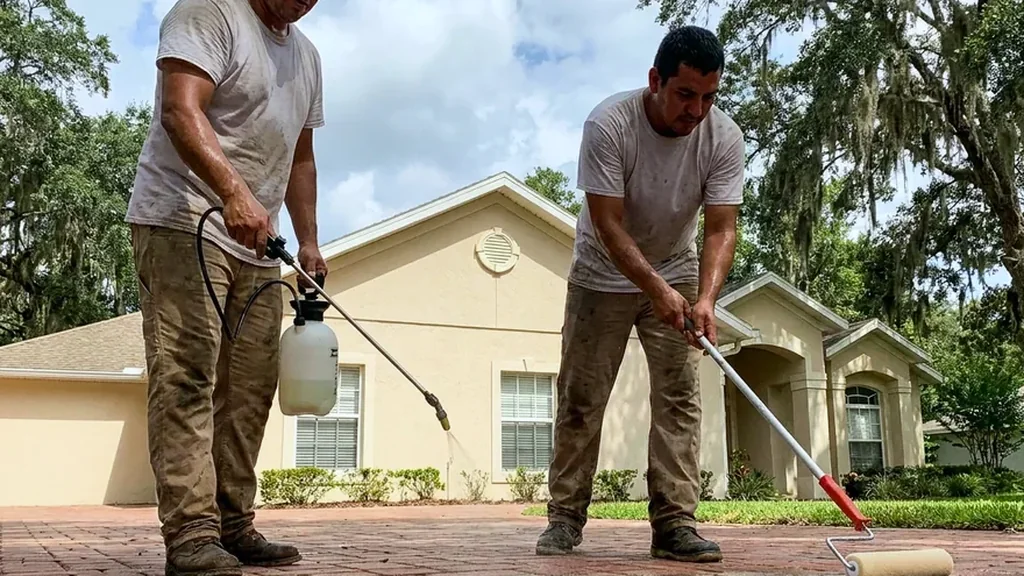
When sealer is included, a pump sprayer lays it down and a dry roller evens it out. Afterward the contractor walks the area with you and says how long feet and cars should stay off.
Frequently Asked Questions
How long does paver sealing last in Florida?
Published advice runs from two to five years. An Orlando sealing company says two to four, with a sunny driveway near the short end and a shaded pool deck near the long end, and Unilock says three to five. Heavy sun, daily car traffic and sprinkler overspray all shorten it.
What happens if pavers are not sealed?
Bare pavers take the weather with no protection. An Orlando sealing company points to humidity feeding algae and mold, UV fading the color and moisture soaking in. Unilock adds that its concrete pavers do not require regular sealing, so skipping it is a choice about looks and upkeep.
How much is paver sealing in Florida?
Two Central Florida paver companies publish $1.50 to $3.00 per square foot to clean, sand and seal. For a 600 square foot driveway in Lake Nona, that works out to about $900 to $1,800. Stripping old sealer and fixing sunken pavers cost extra.
Why is paver sealing so expensive?
Most of the price pays for prep and labor. A full job covers algae treatment, a wash, joint sand, drying time and a careful coat, and an Orlando company says a job that needs old sealer stripped takes two to three days instead of one. A quote far below the range usually leaves a step out.
What do professionals use to seal pavers?
Orlando sealing companies describe water-based sealer as the standard for brick and concrete pavers, and Unilock describes a sprayer for the coat and a dry roller for the extra. Natural stone such as travertine takes a penetrating sealer instead. Ask for the brand and the product data sheet.
Is it better to spray or roll paver sealer?
Many contractors use both. Unilock suggests a sprayer for an even coat that avoids lap marks and haze, then a dry roller to pick up the extra so streaks and drips do not set.
Is there a downside to sealing pavers?
Yes, a few. Sealing comes back as a cost every few years. A glossy film can feel slick near a pool, and a coat applied to damp pavers can turn cloudy. Unilock calls sealing more a matter of looks than upkeep. A dry day and a finish chosen for each area head off most of the trouble.
Can I seal the pavers around a Lake Nona pool without making them slick?
Yes. Ask for a low sheen and a slip-resistant additive. A Central Florida paver company recommends non-slip additives around travertine pool areas, and an Orlando company warns that a film-forming coat on natural stone can turn slippery.
How long should I keep cars off a new coat in a Lake Nona driveway?
Plan on about 48 hours. A Central Florida paver company says to keep cars off for at least 48 hours, and Unilock asks for up to 48 hours of dry weather while the coat cures. The Laureate Park association lets cars stay on the street up to three days, so a two day wait fits there.
Which Lake Nona pavers need attention first?
Share your street and the spot that bothers you, and a contractor writes back inside 1 business day, usually much sooner.
Free, no obligation