
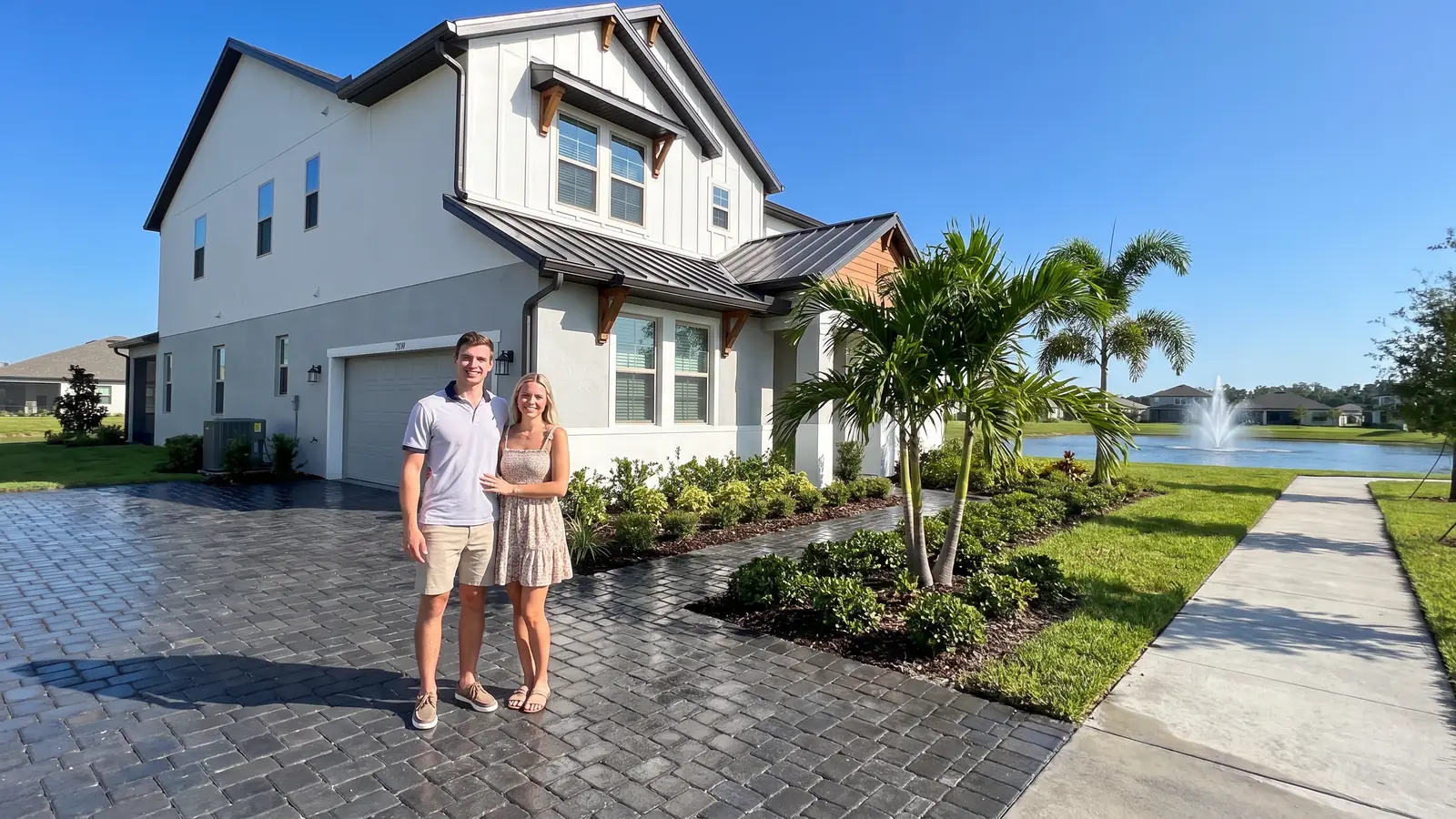
Paver sealing for St. Cloud homes
Paver Sealing in St. Cloud, FL
Down the avenues named for states, St. Cloud pavers get a free sealing estimate when you call (689) 302-4968.
- Brings out deeper paver color
- Fresh joint sand helps lock pavers in place
- Gives weeds less room to grow
- Makes the surface easier to keep clean
- Free estimate, no obligation
Request a Free Estimate
Free, no obligation.
Fast, careful paver sealing in St. Cloud
Paver sealing in St. Cloud begins with a free estimate from a local contractor who washes, re-sands and seals driveways, pool decks and patios. Look for a call or message within 1 business day, usually much sooner. Call (689) 302-4968, and tell the contractor if your home is downtown or in a newer neighborhood.
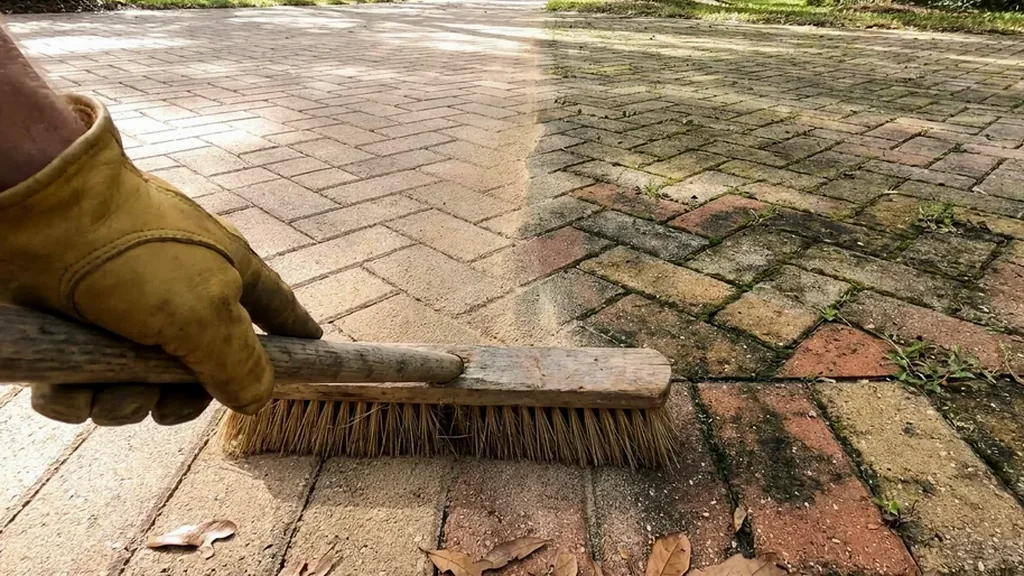
Picture a driveway where the color has gone chalky, the joints sit low and a green line follows the shady edge. A wash, new sand and a fresh coat give it a clean, even look again. You can send a free estimate request to describe your pavers, and a price comes before any work is booked.
Why hire a local paver sealing contractor in St. Cloud?
St. Cloud homeowners pick a local paver contractor because the city mixes century-old streets with fast new growth, and each kind of lot needs a different plan. To hear what that means for your pavers, send a free estimate request.
Free estimate first
The contractor looks over your St. Cloud driveway or patio at no charge, and you choose after you see the price.
A range to hold bids to
Central Florida sealing runs $1.50 to $3.00 per square foot to clean, sand and seal, so you have a fair comparison.
Finish that suits stucco
Matte sits calmly beside Spanish Revival fronts. Wet look deepens color but scuffs sooner on a daily drive.
Plans that bend to weather
Summer storms can move a date. A local contractor holds a spare dry day for your St. Cloud job.
Get Your Free Estimate in St. Cloud
Tell us about your pavers in St. Cloud.
Free, no obligation
What paver problems show up most in St. Cloud?
Pavers on wet, sandy ground
University of Florida says the most widespread soils in the state form in sands and loamy sands, and most of them drain poorly on flatwoods land. St. Cloud sits on the edge of East Lake Tohopekaliga, so water may sit close to the surface after rain. Wet ground can soften the base under a drive and let pavers settle. Sealer keeps a dip as it finds it, so low spots are reset first. Point out any spot where a puddle forms after rain, since that is often where the base has moved. A reset costs less than lifting the whole drive later.
Lake damp and shade on patios
East Lake Tohopekaliga covers about 12,000 acres, and Orlando area rain adds up to about 51 inches a year, mostly June through September. Damp air near a lake helps green film grow on shaded pavers. A patio that rarely sees sun may stay wet for days. Sealer needs a dry surface, so that patio can be the last stop on a job. Ask the contractor if the work can be split across two dry mornings. That plan beats sealing a patio that has not fully dried.
Fast growth means mixed ages of pavers
Wikipedia gives St. Cloud 58,964 people in 2020 and an estimate of 74,960 in 2025. New streets rose beside century-old ones, so one block can hold pavers laid last year and pavers laid decades ago. Each age needs its own plan. Older drives often need more sand and a test for old sealer, while newer ones may only need a wash and a coat. Tell the contractor when the pavers went in, even if you only know the year the house was built. That date shapes how much old product to look for.
Rust from sprinkler water
The University of Florida says most Florida well water carries a lot of iron, and irrigation that uses it paints walks and walls orange. Some homes on larger lots run wells for the yard. Rust fans along a drive need a stain treatment before sealing, since sealer would trap them for good. A spray head turned away from the pavers helps slow new marks. If you are not sure where your irrigation water comes from, ask the contractor to read the stain pattern near the sprinkler heads.
Whitish haze after a bad sealing day
A whitish haze is the classic sign of a bad day for sealing. St. Cloud's humid subtropical climate makes damp stone common, and one Central Florida company says solvent-based coats can whiten and peel when applied in those conditions. A contractor can tell whether the haze needs stripping or only a fresh coat. Point out every cloudy patch at the first visit, since one hazy spot often means a cause that sits under others.
Does paver sealing differ downtown and in newer St. Cloud neighborhoods?
It can, because St. Cloud has two distinct faces. The downtown streets date to the 1909 veterans' colony, with Spanish Revival buildings by Ryan and Roberts and avenues named for states that cross US 192. Newer neighborhoods grew out from there as the city passed 58,000 people. Say which side of town you live on when you send a free estimate request.
Near downtown, lots are older and pavers may be too, so the contractor plans more time for sand and an old-coat test. Homes by East Lake Tohopekaliga and Canal 31 get more damp and more green film. Call (689) 302-4968 and mention how close your patio sits to the water.
In newer subdivisions, an HOA may review driveway work. One renovation guide says boards in the Orlando area commonly review driveway and walkway work, and a decision can take 30 to 60 days. Ask your board before you book, then send a free estimate request once you know what is allowed.
What does paver sealing cost in St. Cloud?
Expect a clean, sand and seal bid in St. Cloud to fall in the $1.50 to $3.00 per square foot range that Central Florida companies publish. Green film from lake damp, rust marks and old sealer push a quote up inside that range. A drive plus a pool deck and a lanai adds area quickly. For a price on your pavers, send a free estimate request.
Layout matters, too. A broad drive on a new street goes fast, while a courtyard behind older stucco takes more carrying. A wet patio may need a second visit. Call (689) 302-4968 and describe what is on your lot so the contractor can flag the likely unknowns.
| Paved area | Typical example | Clean, sand and seal |
|---|---|---|
| 300 sq ft | Small patio or walkway | $450 to $900 |
| 600 sq ft | Two car driveway | $900 to $1,800 |
| 1,000 sq ft | Large driveway or pool deck | $1,500 to $3,000 |
| 1,500 sq ft | Driveway plus pool deck | $2,250 to $4,500 |
Math based on the $1.50 to $3.00 per square foot that Central Florida paver companies published as of November 2026. Your contractor sets the actual price after seeing the surface. Repairs, leveling and stripping failed sealer are usually extra.
How does a paver sealing job work in St. Cloud?
Look at the surface and the ground
The contractor walks your driveway and patio and checks for stains, low pavers and peeling sealer. On ground that holds water, low spots are common, so those get reset first. A small test shows what old coat is down, because water-based sealer cannot go over solvent-based sealer. The contractor also asks how close your lot sits to the lake. That answer tells the crew how much damp and green film to expect, and how long the pavers may need to dry.
Wash away green film, rust and grime
The wash clears lake-damp green film, leaf stains and packed dirt. Rust from sprinklers gets a stain treatment during this step. Sealing over dirt can trap a stain for good, so the wash cannot be skipped. Rinse water stays off flower beds and screens as much as possible. Cars and furniture move out first so the wash reaches every edge and corner.
Refill every joint with sand
Washing pulls out old joint sand, so new sand goes in before the sealer. Full joints keep pavers locked together and slow weeds. On wet ground, tight edges help a drive stay even. The surface is swept clean when the joints are full, and loose grains are cleared away so they do not dull the finish. The crew checks that no joint is left half full.
Give the pavers time to dry
Sealer needs a dry surface. A patio shaded by oaks near the lake can take days to dry, while a sunny drive dries in a morning. Summer storms arrive most afternoons, so a careful contractor starts early and checks the sky. Sealing damp pavers can leave a white haze. If a shower hits mid-job, the crew pauses and comes back the next dry morning.
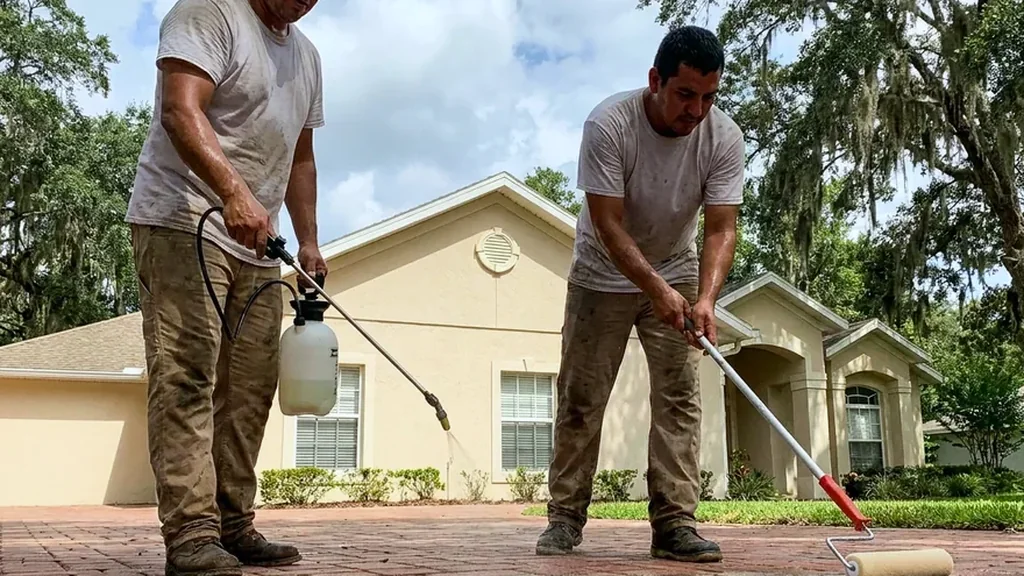
Apply sealer and keep off
The coat goes down in whichever finish you picked. Companies quote two to five years between coats, and a wet look shows its scuffs sooner than matte. One Central Florida company says furniture should wait about 24 hours and vehicles at least 48. Ask what your weather means for the wait. A cloudy or humid week can stretch each of those times, and the contractor should say so before the job starts.
Complete paver services in St. Cloud
A St. Cloud job goes look, wash, re-sand, dry, seal. The wash clears lake-damp green film and rust, and fresh sand goes in before the coat. The sealer goes last so nothing grimy is trapped under it. To hear how long each stage takes for a drive your size, call (689) 302-4968.
Driveways take tires and strong sun, while pool decks and lanai floors take water and bare feet. Walks near downtown streets see steady foot traffic, and patios near the lake stay damp. Each wears in its own way. When you send a free estimate request, list every surface you want done.
Product choice is water-based or solvent-based, then matte or wet look. If a past owner left a solvent coat, a water-based product cannot go on top. Matte sits well beside Spanish Revival stucco, and a wet look suits a bold new patio. Call (689) 302-4968 to talk through your finish.
Orlando area rain peaks from June through September, often as strong afternoon storms. A date in St. Cloud can slide a day or two, so a flexible week works best. Cooler, drier months often give an easier window. For a date that fits your street, send a free estimate request.
Questions to ask before you hire
- My HOA has rules for exterior work. Can you stay within them?
- Can you send your certificate of insurance before the day of the job?
- What happens to joints where the sand has washed out or a few pavers have settled?
- Can you treat green algae and the rust spots my sprinklers left?
- How soon after the job can I pressure wash or hose off the pavers?
- Will you cover my plants, my screen enclosure and my garage door?
- Which sealer goes on my pavers, and does it leave a wet look or a natural one?
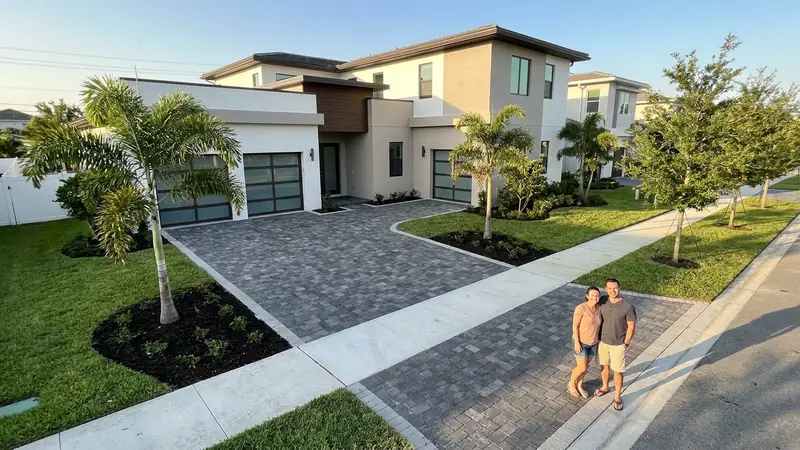
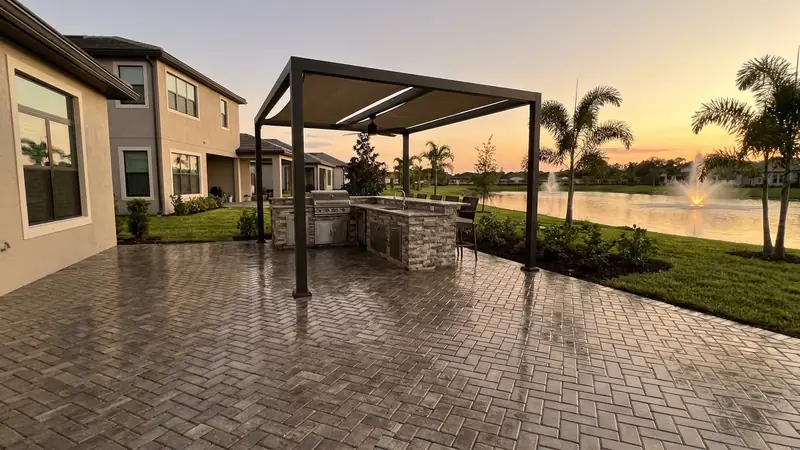
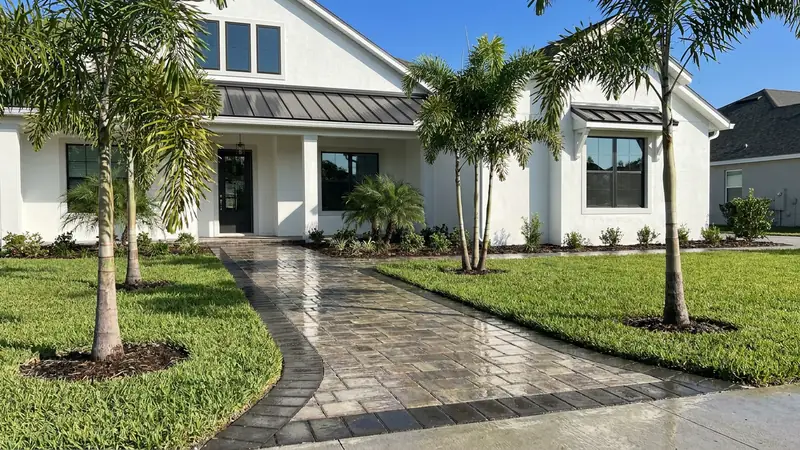
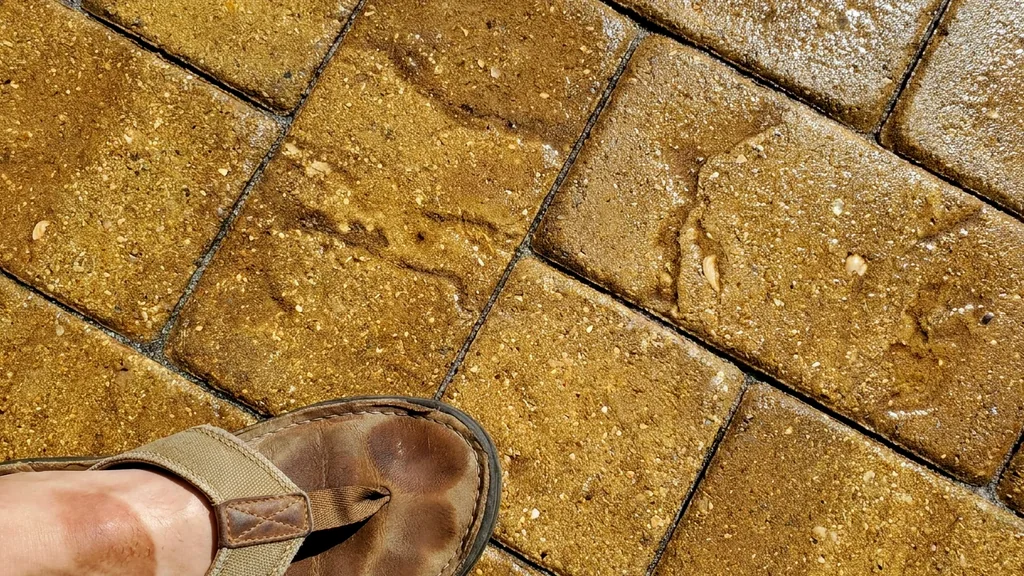
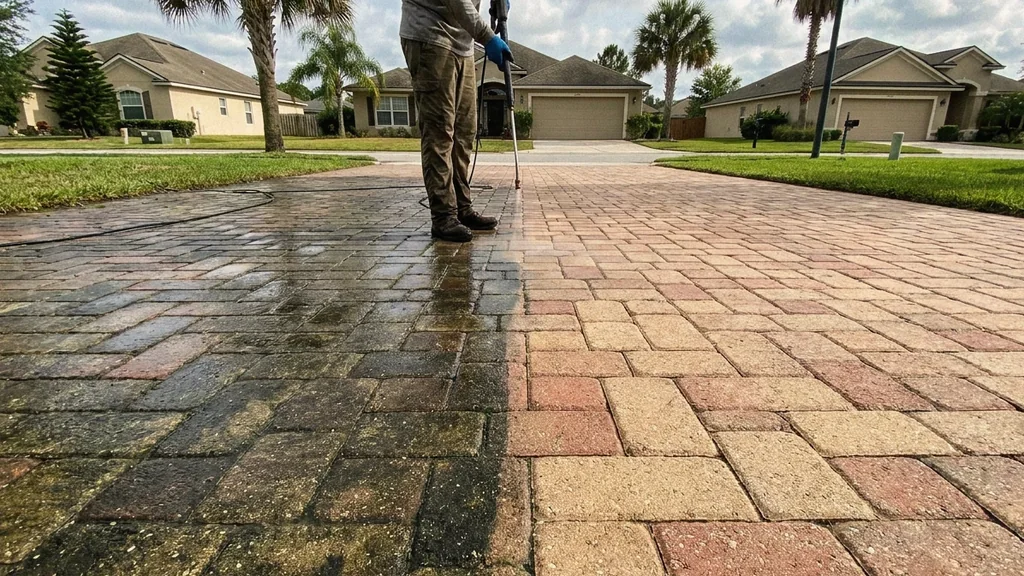
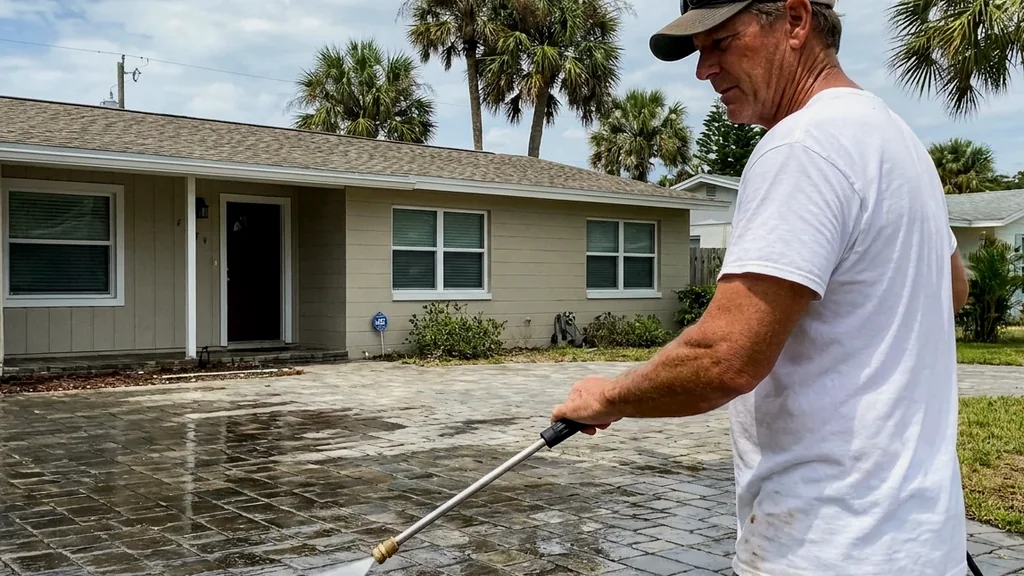
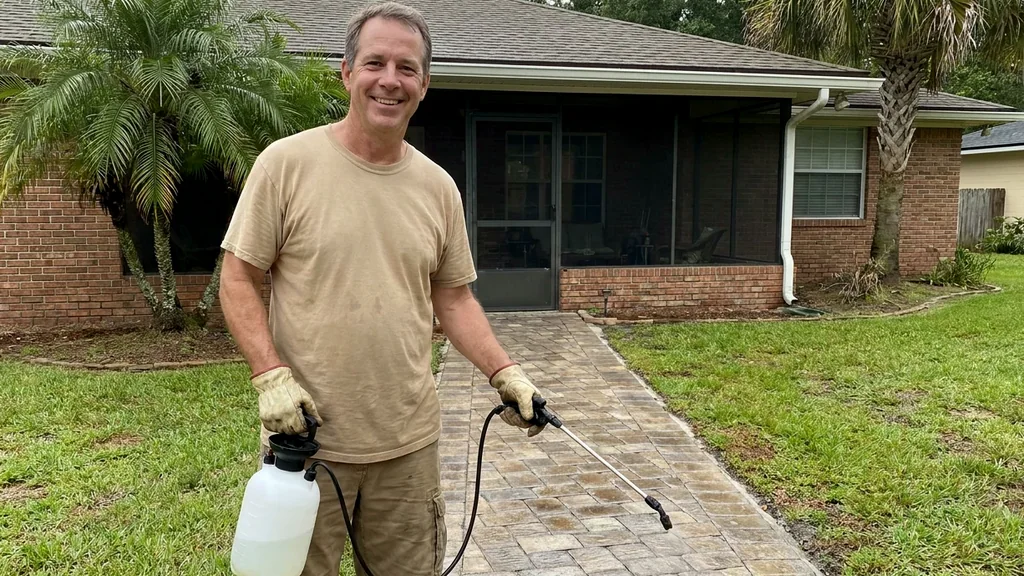
What do sealed pavers look like around St. Cloud?
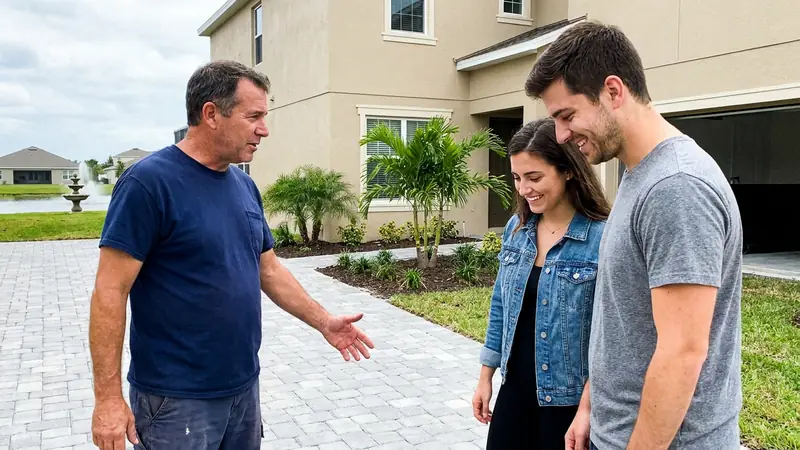
Why local matters in St. Cloud
A contractor who works St. Cloud knows the city mixes old downtown streets with new subdivisions. That affects how much sand the pavers need, what coat may be down and whether an association reviews the job. A local crew asks those questions first. For a contractor who covers Osceola County, call (689) 302-4968.
Local crews also know how water behaves near East Lake Tohopekaliga. Damp air, shaded patios and wet ground change how long pavers take to dry. A contractor used to the lake plans extra drying time and a spare day. If that planning matters to you, send a free estimate request and ask how the visit would run.
Growth adds a twist, since St. Cloud went from 58,964 people in 2020 to an estimate of 74,960 in 2025. Crews stay busy and good dates fill. A local contractor can tell you how far out dates run. Describe your pavers when you send a free estimate request, and you will be under no obligation to hire anyone.
Why is St. Cloud called the Soldier City?
It is called the Soldier City because the town began in 1909 as a colony for Union army veterans. The Seminole Land & Investment Company bought 35,000 acres and chose the land for its health, climate and soil. A Grand Army of the Republic hall hosted social and political gatherings for decades, so call (689) 302-4968 if you live near the old downtown.
Mount Peace Cemetery holds 427 Union veterans buried between 1910 and 1942, and the state marker on 10th Street tells their story. Veterans Park and the St. Cloud Heritage Museum carry that history forward, and East Lake Tohopekaliga sits just north. Near any of these places, send a free estimate request and name your street.
Frequently Asked Questions
How long does paver sealing last on a driveway in St. Cloud?
Count on two to five years between coats, the range companies commonly quote. Pavers near the lake or under shade may sit at the shorter end. Water that beads on a dry day means the sealer still works, and water that soaks in means it is time.
What happens if pavers are not sealed in St. Cloud?
Bare pavers lose joint sand sooner, fade and take stains more easily. Lake damp and sprinkler rust add to it. A neglected St. Cloud driveway may need a longer wash and new sand before sealing.
How much is paver sealing in St. Cloud?
Central Florida companies publish a range of $1.50 to $3.00 per square foot to clean, sand and seal. Your St. Cloud price depends on stains, old sealer and missing joint sand. Get the total square feet in writing so you can compare bids.
How much does it cost to resand and seal pavers in St. Cloud?
The published Central Florida range of $1.50 to $3.00 per square foot already includes cleaning, new joint sand and sealer. Heavy rust, oil or an old coat that must come off can push a quote up. A short visit gives you a number for your own lot.
Is it worth it to seal pavers in St. Cloud?
It can be, since sun, storms and lake damp all wear on pavers. Sealing helps hold joint sand and slows stains. It needs a new coat every few years, and a wet look shows scuffs sooner, so weigh both before you decide.
Do pavers near East Lake Tohopekaliga need extra care?
They often need extra drying time and a stronger wash, since damp air grows green film. Sealer cannot go on until the surface is fully dry. A contractor may split a lakeside job into two days.
How soon can I use my St. Cloud driveway after sealing?
One Central Florida company says to wait at least 4 to 6 hours for foot traffic, about 24 hours for furniture and at least 48 hours for vehicles. Humid or shaded spots can take longer. Ask the contractor for the exact times.
Does my St. Cloud HOA need to approve paver sealing?
It may. One renovation guide says boards in the Orlando area commonly review driveway and walkway work, and a decision can take 30 to 60 days. Ask your board before you book and keep approval in writing.
Can sealer go over an old coat on St. Cloud pavers?
Not always, since a water-based coat cannot go on top of a solvent-based one. The contractor tests a small spot to learn what is down. Older downtown properties may have layers from several owners.
Which finish suits a Spanish Revival home in St. Cloud?
Matte tends to sit quietly beside stucco and clay-toned trim. A wet look deepens color but shows scuffs sooner on a driveway. Ask the contractor to show a small patch of each in your own light.
When is a good season to seal pavers around St. Cloud?
Choose a run of dry days, because sealer needs a dry surface and a rainy forecast is a reason to wait. Rain peaks from June through September. Cooler, drier months often give an easier window, though the forecast decides.
Should I wash and sand my St. Cloud pavers before sealing?
Yes, the pavers get washed first and re-sanded before sealer touches them. A coat sealed over dirt traps the stains for good. Plan on all three steps as one job.
Ready for a Free Estimate in St. Cloud?
Call (689) 302-4968 and tell us about your pavers.
Free, no obligation